
Can GLP-1 Weight-Loss Medications Treat Alcohol Use Disorder?
Citation
Klausen M, Justesen S, Pedersen J et al.
Once-weekly semaglutide versus placebo in patients with alcohol use disorder and comorbid obesity: a randomised, double-blind, placebo-controlled trial.
The Lancet. 2026;407:1687–1698.
DOI: 10.1016/S0140-6736(26)00305-3
Each month, I review an important new alcohol research paper, separating the evidence from the headlines and explaining what the findings really mean.
Why This Paper Matters
For several years, there has been growing interest in whether GLP-1 receptor agonists - better known as weight-loss medications, such as semaglutide or Wegovy, might also reduce alcohol consumption.
It may seem surprising at first. These medications do not simply reduce appetite. They also appear to influence areas of the brain involved in reward, motivation and craving.
Animal studies and early human research have suggested that they may reduce interest in alcohol. This study provides the strongest clinical evidence so far.
Study at a Glance
Who took part?
108 adults with obesity and alcohol use disorder. Their average age was 52, and approximately 85% met the criteria for severe alcohol use disorder.
Study design
A randomised, double-blind, placebo-controlled clinical trial.
What treatment did they receive?
Half received weekly semaglutide injections and half received placebo injections. All participants also received cognitive behavioural therapy.
What was the main question?
Whether semaglutide reduced the number of heavy drinking days compared with placebo.
What Did the Researchers Find?
Heavy drinking days fell
Participants receiving semaglutide reduced their heavy drinking days by 41% from the start of the study, compared with a 26% reduction in the placebo group.
Other alcohol-related measures improved
Participants taking semaglutide also showed improvements in several other measures, including overall alcohol consumption, alcohol craving, AUDIT scores and some markers of liver function. The fact that several measures moved in the same direction adds weight to the main finding.
Participants lost more weight
As expected, participants receiving semaglutide lost more weight than those receiving placebo.
Side effects were generally manageable
The medication was generally well tolerated. The most common side effects were gastrointestinal problems such as nausea and stomach upset, which are already well recognised with GLP-1 medications.
Study limitations
Although the results are encouraging, there are some important limitations.
The study only included people who had both obesity and alcohol use disorder. We therefore cannot assume that the same results would be seen in people who are not overweight.
Everyone in the study also received cognitive behavioural therapy. This means the trial tested semaglutide as an addition to psychological treatment, not as a replacement for it.
The study included 108 participants, so larger trials and longer follow-up will be needed before semaglutide could become a routine treatment for alcohol use disorder.
Why This Matters
For more than a decade, research has suggested that GLP-1 medications may affect more than appetite. They appear to influence brain systems involved in reward and motivation, the same systems that play an important role in alcohol use disorder.
This trial provides the first high-quality clinical evidence that targeting these pathways may reduce heavy drinking in people with alcohol use disorder and obesity.
Current medication options for alcohol use disorder are relatively limited and do not work equally well for everyone. If future trials confirm these findings, GLP-1 medications could become a valuable addition to existing treatments.
The study also reinforces an important principle: alcohol use disorder is not simply a failure of willpower. It involves changes in brain systems involved in learning, reward and craving, which is why treatments that act on these systems may help.
Charles's View
I discussed the growing interest in GLP-1 medications in Why We Drink Too Much, before randomised clinical trial evidence was available.
This study is an important milestone. It supports the theory that these medications can influence alcohol-related reward and craving as well as appetite.
It is still too early to consider semaglutide an established treatment for alcohol use disorder, and the results apply specifically to people with obesity. Nevertheless, I suspect this is the beginning of an important new direction in alcohol treatment research.
Key Takeaway
Semaglutide reduced heavy drinking in people with alcohol use disorder and obesity when used alongside cognitive behavioural therapy.
It is not yet a stand-alone treatment or a cure, but this trial provides the strongest evidence so far that GLP-1 medications may have a future role in alcohol treatment.
Reference
Klausen M, Justesen S, Pedersen J et al. Once-weekly semaglutide versus placebo in patients with alcohol use disorder and comorbid obesity: a randomised, double-blind, placebo-controlled trial. The Lancet. 2026;407:1687–1698.
DOI: 10.1016/S0140-6736(26)00305-3
Are the Health Consequences of Alcohol Use Disorder Worse for Women?
Citation
Scarth M et al.
Mental and somatic multimorbidity among individuals with alcohol use disorder: A sex-stratified registry study.
Drug and Alcohol Dependence. 2026;286:113248.
DOI: 10.1016/j.drugalcdep.2026.113248
Each month, I review an important new alcohol research paper, separating the evidence from the headlines and explaining what the findings really mean.
Why This Paper Matters
Alcohol use disorder affects both men and women, but clinicians have long suspected that the health consequences may not be the same.
Many people assume this simply reflects differences in social attitudes or access to treatment. This large Norwegian study instead examined whether women with alcohol use disorder actually experience different patterns of physical and mental illness than men.
By analysing health records from more than 67,000 people with alcohol use disorder, it provides some of the strongest evidence to date that women often experience a greater burden of illness.
Study at a Glance
Who took part?
67,358 Norwegian adults with alcohol use disorder, together with a similar number of age- and sex-matched individuals without alcohol use disorder. Participants were born between 1951 and 1975.
Study design
A nationwide Norwegian registry study comparing physical and mental health diagnoses in people with and without alcohol use disorder.
What was the main question?
Whether women and men with alcohol use disorder differ in the prevalence and combinations of common physical and mental health conditions.
What Did the Researchers Find?
Alcohol use disorder was linked with many more health problems
People with alcohol use disorder had substantially more physical illnesses than healthy controls and were around three times more likely to have died during the study period.
Women carried a greater burden of physical illness
Women with alcohol use disorder had an average of nine medical diagnoses compared with six in men. Asthma, urinary disorders and dementia were particularly more common among women.
Mental health problems were common in both sexes
Both men and women showed high rates of mental health conditions, but women were more likely to experience severe stress reactions, anxiety and eating disorders. Men were more likely to have schizophrenia and other substance use disorders.
Women often experienced multiple conditions together
Women were more likely to have combinations of chronic pain and mental health conditions occurring together, suggesting a particularly complex pattern of illness.
Study limitations
This was an observational registry study, so it cannot prove that alcohol directly caused these illnesses.
The study also relied on diagnoses recorded within the healthcare system, meaning some people with alcohol use disorder or associated illnesses may not have been identified.
Finally, because the study was conducted in Norway, healthcare systems and drinking patterns may differ in other countries.
Why This Matters
The study suggests that alcohol use disorder may affect women differently as well as more severely.
Rather than experiencing a single illness, many women appear to develop multiple interacting physical and mental health conditions. This has important implications for assessment and treatment.
The findings also reinforce the importance of recognising alcohol use disorder as a whole-person medical condition rather than focusing solely on drinking behaviour.
Charles's View
For many years we have known that women tend to develop alcohol-related disease after lower levels of alcohol exposure than men. This study extends that understanding by showing that women with alcohol use disorder frequently experience a broader range of interconnected physical and mental health conditions.
It does not mean that alcohol use disorder is "easy" for men. Rather, it suggests that women often present with a different and more complex pattern of illness that deserves greater recognition in clinical practice.
As our understanding improves, treatment needs to become increasingly personalised rather than assuming one approach fits everyone.
Key Takeaway
Women with alcohol use disorder appear to experience a greater burden of both physical and mental illness than men, often involving multiple conditions occurring together.
This large Norwegian study reinforces the need for assessment and treatment that recognises these important sex differences.
Reference
Scarth M, Bjørnebekk A, Bramness JG, Abebe DS, Stavseth MR. Mental and somatic multimorbidity among individuals with alcohol use disorder: A sex-stratified registry study. Drug and Alcohol Dependence. 2026;286:113248. DOI: 10.1016/j.drugalcdep.2026.113248

Women, Menopause and Alcohol: What Does the Research Show?
Davies EL, Burton S, Monk R, Murdoch E, Pearce E, Rose AK.
Women’s alcohol use in mid-life: Identifying associations between menopause symptoms, drinking behaviour, and mental health.
Women’s Health 2025; 21: 1–19
Why This Topic Matters
The observation that many women come to review their relationship with alcohol in midlife, and especially during the period of the perimenopause, has become a common subject of popular discussion, notably in grey area drinking and sober curious communities. This interesting study, conducted by investigators from several major UK university psychology departments, seeks to put some data around the subject.
How the Study Was Conducted
Using a mixed methods cross-sectional survey approach (meaning that the survey sought quantitative and qualitative data), they used several well-validated questionnaires (including AUDIT, DMQ, mental health tools, etc.) and free text responses to map the relationship between stages of the menopause and drinking behaviour - both in terms of the amount consumed but also motivations for consumption.
Who Took Part
The survey was completed by 936 women aged 40–65 years.
Key Findings (and Important Caveats)
The results are quite dense and somewhat hampered by an excess of mathematical correlations when actual differences were numerically quite small.
However, several findings are reasonably clear, accepting that such associations in this sort of study do not indicate causation i.e. we may see differences between groups, but these are insufficient (by design) to show that the menopausal status actually caused the difference.
What the Study Found
These were that perimenopausal participants, compared to pre- or postmenopausal women, reported:
The highest levels of menopause symptoms
Negative reinforcement drinking motives (e.g. drinking to cope)
Negative mood
The lowest well-being scores
Additionally, negative reinforcement motives partially mediated the relationship between menopausal symptoms and hazardous drinking.
Qualitative findings showed that women often drank as a coping mechanism, while some avoided alcohol due to its potential to worsen menopausal symptoms.
What This Means
The authors correctly conclude that the study provides new insights into the associations between menopausal symptoms, alcohol use, and mental health in midlife women.
Although such findings are more hypothesis-generating than conclusive, they highlight the complex factors driving alcohol use and avoidance, suggesting that tailored interventions may be needed for women in midlife.
This research underscores the importance of addressing alcohol-related risks in this under-researched group, but also provides more general credibility to the notion that negative reinforcement motives are much more important than positive ones when it comes to driving problems with alcohol.
Key Takeaway
The key message isn't simply that menopause and alcohol are linked. Rather, this study suggests that many women are drinking less for pleasure and more to cope with difficult symptoms and emotional distress. Understanding why someone drinks may therefore be just as important as measuring how much they drink.
Reference
Further reading available via the original publication.
Davies, E.L., Burton, S., Monk, R., Murdoch, E., Pearce, E., & Rose, A.K. (2025). Women’s alcohol use in mid-life: Identifying associations between menopause symptoms, drinking behaviour, and mental health. Women’s Health, 21, 1–19.
https://doi.org/10.1177/17455057251359767
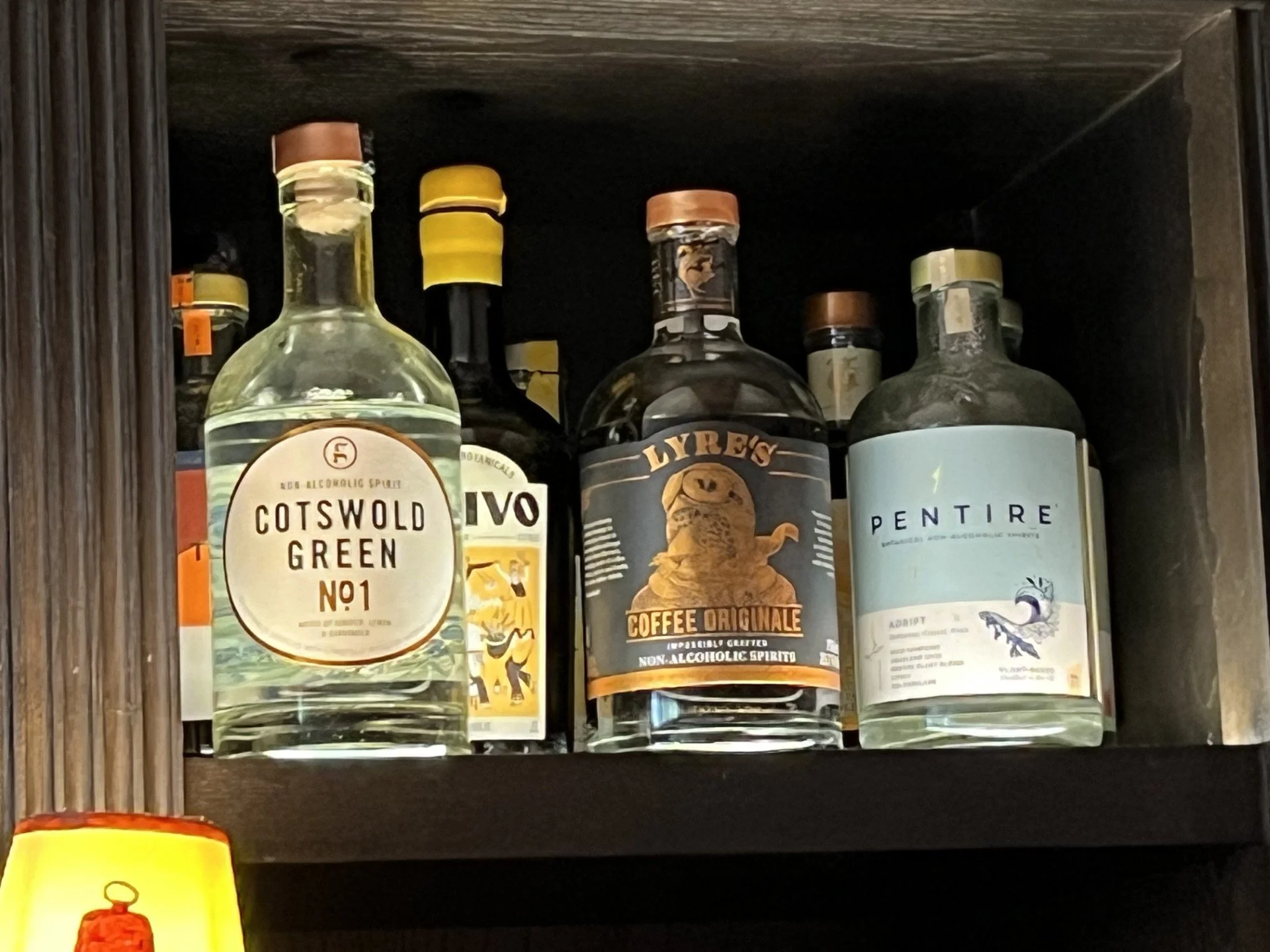
The Rise of Low- and No-Alcohol Drinks: Progress or Inequality?
Summary
Despite a marked increase in the availability and sales of low- and no-alcohol products in Great Britain, their overall market share remains minimal. Moreover, access to these products appears socially patterned, with greater availability in more affluent and rural areas. This raises important questions about whether emerging “healthier” drinking trends are benefiting all groups equally, or reinforcing existing health inequalities.
Citation: Valiente R et al. Low and no alcohol availability and sales in small retailers in Great Britain: A geographic longitudinal analysis from 2018 to 2022. Addiction. 2026 Mar 19. doi: 10.1111/add.70391. Online ahead of print.
Introduction
This month’s search found this interesting paper from the Universities of Edinburgh and Sheffield, UK. With a backdrop of changing attitudes to alcohol and increasing recognition of the harms caused by alcohol, the authors set out to see if sales of low or no alcohol drinks (No/Lo drinks) had changed in the UK over the period 2018-2022. Their focus was on small UK neighbourhood retailers (what we in the UK commonly call ‘off-licenses’) and the study measured differences in the availability and sales of No/Lo products in small retailers across neighbourhoods with varying levels of socioeconomic deprivation and urbanicity (these being known factors in associated risk of alcohol-related harms).
Findings
Their findings based on approximately 11.3 million alcohol transactions across 1,432 small retailers were that No/Lo sales volume tripled over the study period yet accounted for only 0.25% of total alcohol sales by 2022. In 2018, 34% of retailers reported sales of No/Lo products, rising to 68% by 2022. Retailers in low-deprivation and rural areas were more likely to sell No/Lo products and sold a wider product range compared with those in high-deprivation areas.
Conclusion
The authors concluded that while alcohol-free and low alcohol product availability and sales increased among small retailers in Great Britain between 2018 and 2022, these gains have been uneven, with greater access and uptake in more affluent and rural areas. This suggests emerging geographic disparities in access to and sales of No/Lo alternatives and their potential benefits or harms.

Bad Genes or Bad Luck?
Two scientific papers from January 2026 that remind us how alcohol misuse has both genetic and environmental drivers.
· Icick R et al. Identification of risk variants and cross-disorder pleiotropy through multi-ancestry genome-wide analysis of alcohol use disorder. Nature Mental Health 2026; 3: 253-265.
· Disease burden attributable to intimate partner violence against females and sexual violence against children in 204 countries and territories, 1990–2023: a systematic analysis for the Global Burden of Disease Study 2023. Lancet 2026; 407: 31–52.
The first of these papers uses state-of-the-art analytics to interrogate the results of genomic testing on a total sample of 1,041,450 individuals with European, African, Hispanic, East Asian and South Asian ancestry. The methods are complex and don’t seek to actually tell us what individual genes are at play.
Rather, it gives a map of the whole genome in terms of variation at tens of thousands of individual points – a bit like a genetic fingerprint. Armed with this, the researchers use high powered computation to establish a subset of plausible variants that map to regions of the brain associated with alcohol (based on prior knowledge) bringing the fingerprint down to 37 genetic loci of interest (with some variation between ancestries).
They then looked at overlap between variation at these loci seen with alcohol use disorder (AUD) and other important conditions that are known to pose a higher risk of AUD. Their findings confirm what has been shown in several previous studies with slightly different methodologies, namely that schizophrenia, bipolar disorder, depression, ADHD, neuroticism and opioid use disorder are not complications of alcohol use but rather share a genetic liability (correctly called ‘polygenic risk’) with AUD.
The second study looked at what can happen to us during life and the well-known association of abuse (especially in childhood) on development of substance misuse. The researchers estimated the prevalence and attributable burden of Intimate partner violence (IPV) and sexual violence against children (SVAC) in 204 countries and territories, by age and sex, from 1990 to 2023, as part of the Global Burden of Diseases, Injuries, and Risk Factors Study 2023 (funded by Gates Foundation).
Depressingly, they found that globally, in 2023, 608 million females aged 15 years and older had ever been exposed to IPV, and 1·01 billion (0·764–1·48) individuals aged 15 years and older had experienced sexual violence during childhood. The downstream effects of this were marked and included several mental health Schizophrenia, bipolar disorder, depression, dissocial behaviour, deliberate self-harm and substance use disorders (including AUD), the latter being one of the most common consequences of SVAC, especially in males.
Summary:
Research by Icick R et al. and findings published in The Lancet suggest alcohol misuse is shaped by both biology and environment. Genetic factors may influence vulnerability, but social context, stress, and exposure play an equally important role. Together, they show behaviour is driven by the interaction between nature and nurture, rather than “bad genes” or simple chance.
Question: Is dry January a good thing?
It All Begins Here
Short answer
Absolutely. Its not the complete solution for everyone but it is a great starting place for anyone.
Long answer
When the UK charity Alcohol Change first introduced the idea of dry January in 2013, approximately 4,000 people signed up. By 2023 the figure had risen to 176,000. The actual number of people planning to have a dry month in January 2026 is estimated to run into the millions [1]. For some, this month may serve a simple desire to save cash or lose some weight after the usual Christmas excesses, however for others, it is a golden opportunity to rethink their relationship with alcohol and perhaps moderate or stop drinking in the longer-term.
These will not generally be people with medically defined alcohol dependence (who make up only about 2-3% of the UK population [2]) but rather the much larger proportion of regular drinkers (about 20% [2,3]) for whom drinking has started to induce concern about the risks posed by the amount they consume. Using the WHO’s International Classification of Diseases 11th revision (ICD-11), such people best fall under the category of “hazardous alcohol consumption”, where their drinking behaviour (weekly consumption and/or binge episodes) appreciably increases risk of harms, but these are yet to occur. Concern about such future risks, which include acute injuries arising from drunkenness and/or chronic risks to mental and physical health, livelihood and relationships (to name but a few), may lead to a recurring feeling that something needs to change.
This would be all well and good if it was easy to do. However, for a good proportion of regular drinkers, dry January will expose the uncomfortable discovery that drinking has become a hard habit to break. At a superficial level this is because drinking is fun. However, the reality is that over the years, the rewards we have obtained from drinking – rooted in ancient biology (namely the chemical effects of alcohol on our brain’s powerful reward system) – will have become deeply learned and memorised. Having made the first step to free our hands from the glass, we must recognise that such learning, a process that started from our very first drink, cannot be unlearnt any more than we can unlearn to ride a bike. But all is not lost. All we need to do is to invoke the very same basic learning principles that reinforced our drinking behaviour in the first place by now “learning to not drink”.
This can be achieved alone (maybe with the help of a book) but is best achieved by joining one of the now numerous, largely online, communities [4] for people who describe themselves as “Sober curious” or” grey area drinkers”. Such non-medical terms have grown up in the last decade to encapsulate the growing population of people described above – those concerned about the hazards posed by their drinking and their ability to control consumption. The emphasis is on education and self-discovery within a socially cohesive support network, but at their core they are re-invoking the two core tenets of experience-based learning – positive and negative reinforcement. Thus, whilst the fun we had from alcohol’s psychostimulatory effects, and its benefits for social interaction were positively reinforcing, we can now similarly celebrate how good we feel and look, our renewed sleep, clarity, energy and focus by not drinking. Likewise, alcohol’s relaxant and sedative properties as a self-medication may have been negatively reinforcing (they made us feel better by taking away negative feelings, emotions and memories). We can now replicate this by acknowledging the absence of not feeling bad anymore (hangover, stress, anxiety etc.). At the same time, a person can start the journey of identifying and addressing the common psychological drivers for which alcohol seemed a solution in the first place, for example low self-esteem or mood, social anxiety and stress – problems that require the clarity of thought provided by a period of abstinence.
I accept that such programs may not suit everyone. For example, dependent drinkers may require medical support. However, the cognitive, social and psychological pillars of such programs, combined with abstinence derive almost directly from Alcoholics Anonymous in the 1930s and are widely applicable. We therefore need to reframe Dry January not as a punishment period to get through, but as an opportunity to learn something better – something that won’t become redundant like a NY gym membership after the hard work has been started.
References:
[2] J. MacKillop, R. Agabio, S. W. Feldstein Ewing, et al., “Hazardous Drinking and Alcohol Use Disorders,” Nature Reviews Disease Primers 8, no. 1 (2022): 80.
[3] M. C. Reid, D. A. Fiellin, and P. G. O’Connor, “Hazardous and Harmful Alcohol Consumption in Primary Care,” Archives of Internal Medicine 159, no. 15 (1999): 1681–1689.
[4] https://alcoholchange.org.uk/blog/grey-area-drinking-what-is-it-and-does-it-add-anything-to-the-alcohol-debate OR BUPA: https://blua.bupa.com.au/healthy-habits/alcohol/grey-area-drinking-when-that-extra-glass-is-more-than-a-treat OR: https://grayareadrinkers.com/about-jolene-park/